
 Login
LoginPlatform
Una: A familiar, supercharged approach to archives
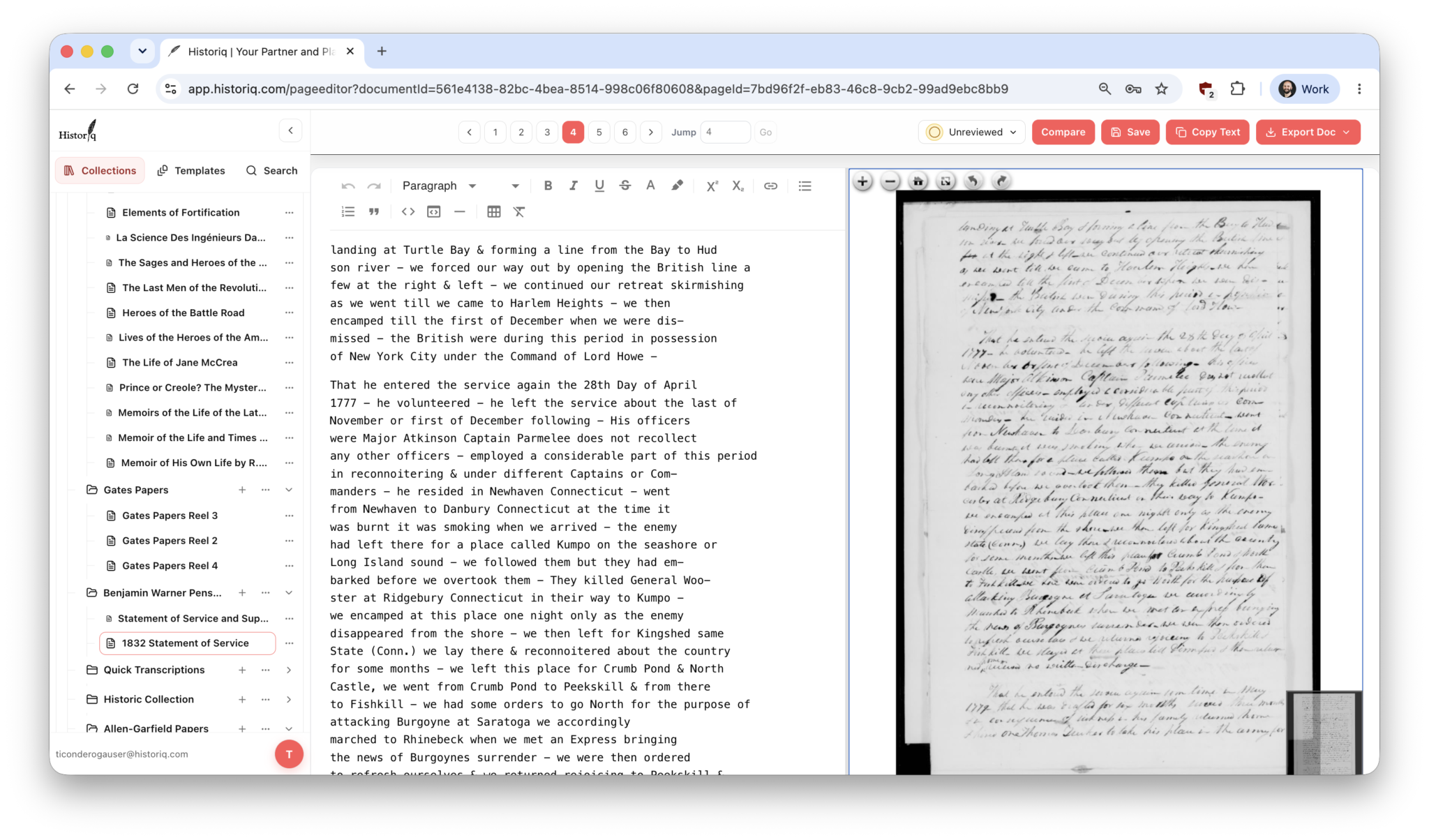
Una is a new kind of collections management system built around the way archivists and museum professionals actually work. Manage physical and digital collections together—from accession and arrangement through description, inventory, transcription, and discovery.
01 / 11
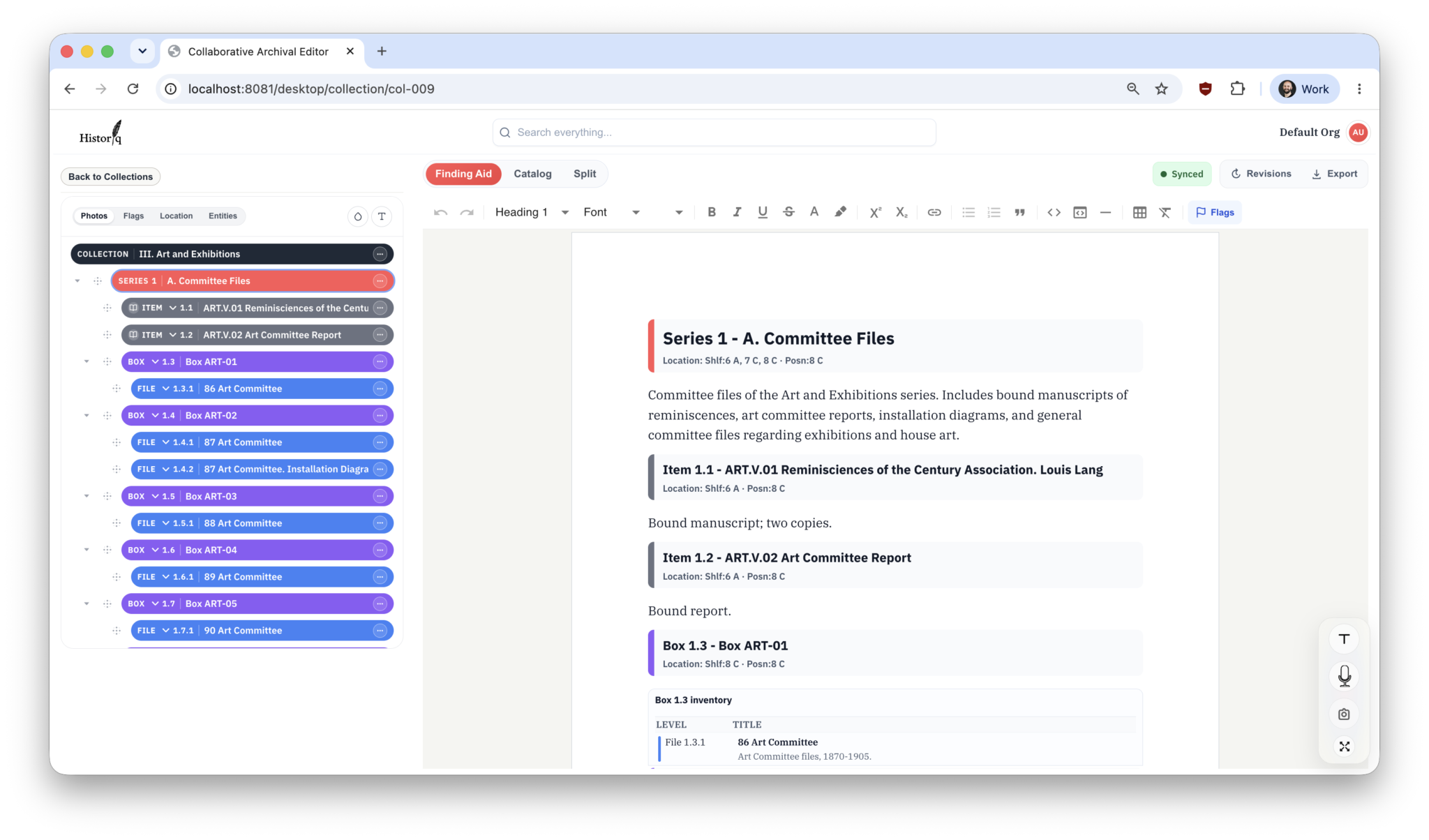
Una Desktop
See the full hierarchy while building the finding aid
Arrange collections, series, items, boxes, and files alongside the descriptive finding aid, with revisions and export tools close at hand.
"Historiq serves as a force multiplier, helping archivists do more with the time they have."
More description, faster
12.2× faster archival processing
Una helps archivists move collections from backlog to discovery dramatically faster—without AI-generated metadata or required digitization.
Process archival collections 12.2× faster per cubic foot.
Historiq Una processed archival records at 1 hour per cubic foot—12.2× faster than a cited 12.2-hour composite benchmark¹—without AI-generated metadata or required digitization.
Hours per cubic foot
1 Composite benchmark derived from archival processing-rate guidance published by RIT Archives Processing Manual, MIT Distinctive Collections Processing Rates, and Yale Beinecke Manuscript Processing Manual.
Historiq's work has moved us leaps and bounds forward in our ability to share our recent accomplishments, while freeing up my time for research and outreach.
02 / 11
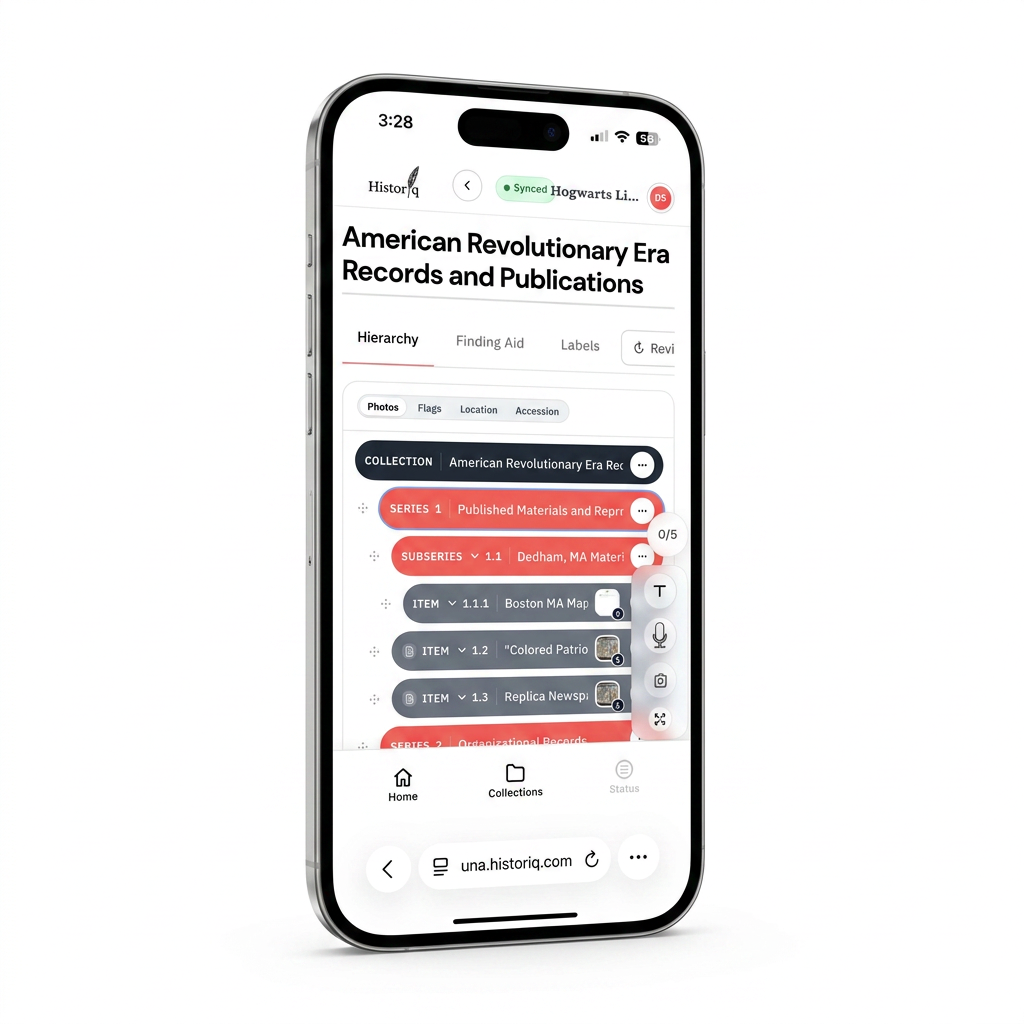
Una Mobile
Carry the same archival hierarchy into the stacks
Review and update the collection structure from a phone, with hierarchy, finding aid, labels, revisions, and field tools available on the move.
Visionary technology to make history more accessible to scholars, historians, and students of history.
Live collection
Art and Exhibitions
4 people here
Synced
Finding aid
Series 1 — A. Committee Files
Committee files of the Art and Exhibitions seriesAU Includes bound manuscripts, committee reports, installation diagrams, and general correspondence documenting exhibitions and house art.
03 / 11
Realtime collaboration
One live collection, with everyone in sync
Multiple people can work in the same collection at the same time without locking records. Una saves automatically, preserves revision history, and keeps work synchronized across laptops, desktops, iPads, and phones.
04 / 11
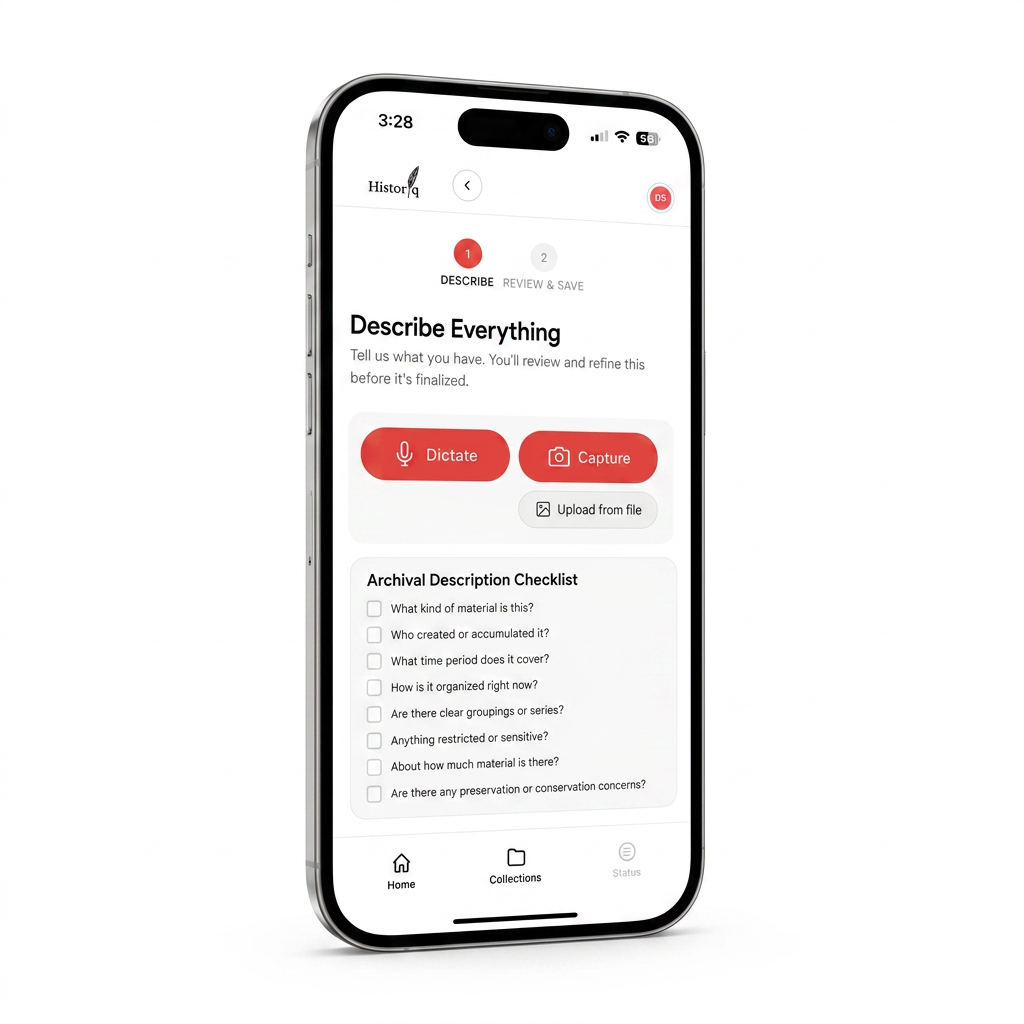
Mobile collection creation
Start describing a collection where the material arrives
Dictate a description, capture images or upload files, and use an archival description checklist to gather context before reviewing and saving.
"It's so impressive to me how much can be done on the platform with very professional results and a hierarchy we can continue to build upon."
05 / 11
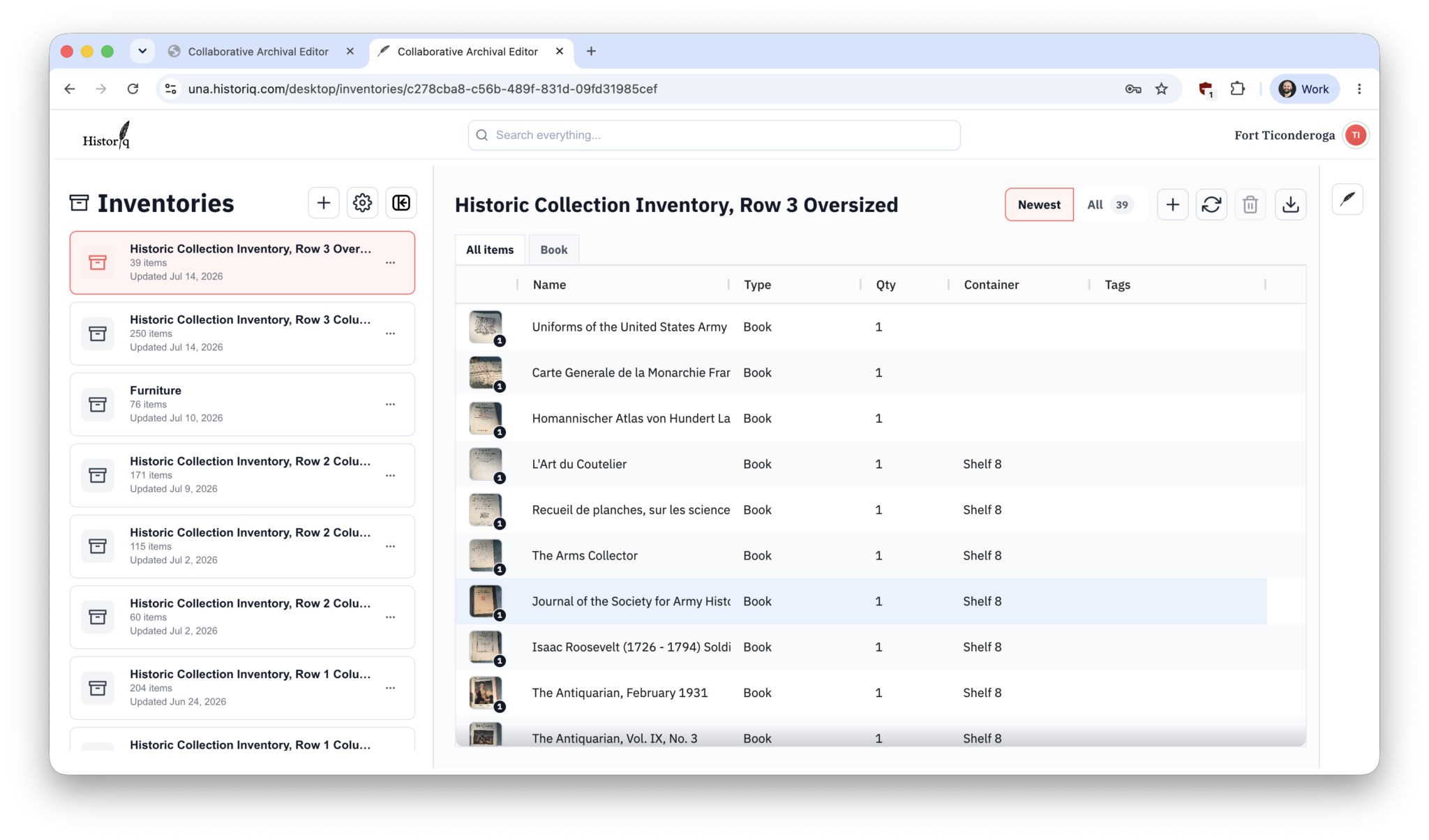
Item-level inventories
Manage item-level inventories without losing collection context
Create inventories, review item counts and types, connect containers and tags, and work with reference images in a spreadsheet-like desktop view.
Fort Ticonderoga faced the challenge of thousands of artifacts requiring cataloging—a daunting task alongside a museum's many other obligations. Historiq is helping process those collections at remarkable speed, including a 3,500-volume rare book collection in four weeks instead of a projected multi-year effort, making its stewardship more visible and accessible.
We could rapidly digitize our collections and generate catalog-ready metadata, achieving in months what once took years.
Accessibility
A hierarchy that works for more people
Clear labels, strong contrast, and accessible palette choices keep every level understandable.
Full hierarchy
Color + labelAuthority Manager
Named entities
People
- Jane Addams
Organizations
- Harbor Historical Society
Places
- Boston, Massachusetts
Subjects
- Community organizations
06 / 11
Authority management
Consistent names, clearer relationships, more accessible views
Manage named people, organizations, places, and subjects in the Authority Manager. Accessibility-focused palettes pair color with clear labels and strong contrast so hierarchy remains understandable for more users.
07 / 11
Transcription
Transparent transcription for complex documents
Choose from available models—including economical open-weight options—then review results side by side. Una handles tables, newspapers, multi-column pages, and more.
A. Committee Files
III. Art and Exhibitions / Series 1
Correspondence and committee reports concerning exhibitions and house art.
Art Committee Report — page 4
Art and Exhibitions / A. Committee Files
Minutes from the Art Committee meeting held in April 1902.
Historic Collection Inventory, Row 3
Inventories / Oversized materials
Includes exhibition catalogs and art committee publications.
Journal of the Society for Army History
Historic Collection Inventory / Shelf 8
Cataloged with the research committee reference library.
Committee on Art and Exhibitions
Named entities / Organizations
Authorized form for the art and exhibitions committee.
08 / 11
Search and discovery
Search across everything
Search collection hierarchies, finding aids, transcriptions, inventories, inventory items, named authorities, and reference images from one place. Filter by source, hierarchy level, collection, item type, or media and jump directly to the result.
Exciting technology to make our collections more discoverable.
Available formats
Portable Document Format
DOCX
Microsoft Word
EAD XML
Encoded Archival Description
TIFF
Tagged Image File Format
JPEG
JPEG image
PNG
Portable Network Graphics
XLSX
Microsoft Excel
CSV
Comma-separated values
and more
Your collections remain portable. Your data remains yours.
09 / 11
Open and portable
Everything is exportable
Take your collections with you. Export finding aids, archival description, inventories, metadata, transcriptions, and images as PDF, Word, EAD XML, TIFF, JPEG, PNG, XLSX, CSV, and more.
Existing finding aids
Structured in Una
Collection
Art and Exhibitions
Series 1
A. Committee Files
Box 1.1
Exhibition records
File 1.1.1
Committee reports
10 / 11
Finding aid importer
Bring your existing finding aids
Start with the work you already have. Import EAD XML directly, or bring in finding aids from HTML, Word, text-based PDF, TXT, or a public URL. Una turns the source into a structured, editable collection hierarchy so your team can keep moving without starting over.
11 / 11
Publish and share
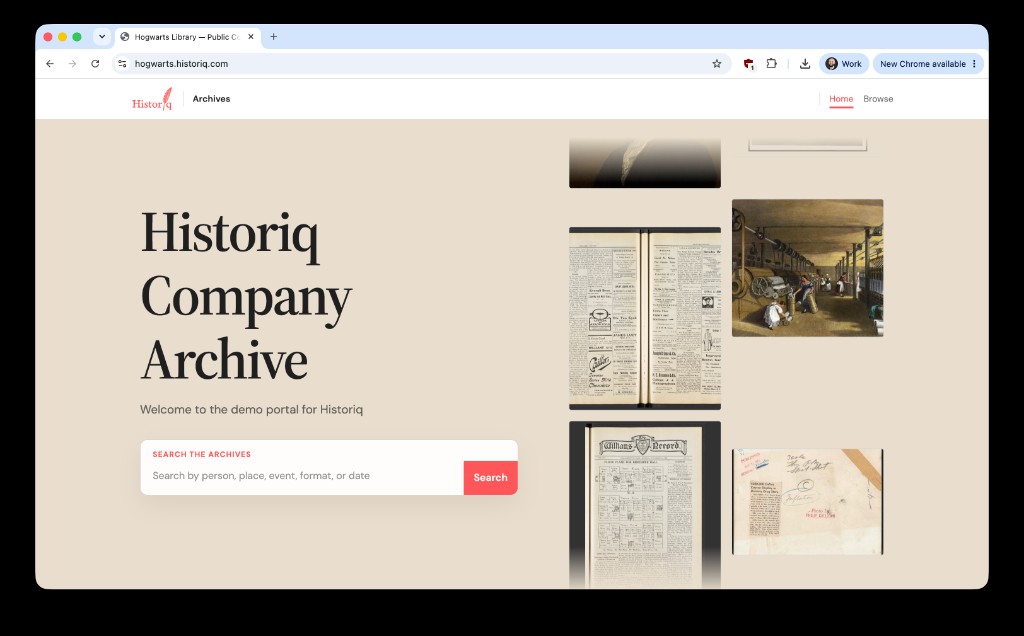
One-click publishing for public or internal search portals
Publish a searchable portal from your collections work in one click—public for your community or internal for your staff. Catalogs, finding aids, inventories, transcriptions, and more are all searchable in one place. Portals are customizable and support curation, so you control what gets shared and how it looks.
People-centered innovation
Technology centered on professional practice
All of our features are created in close collaboration with archivists, curators, and other cultural heritage professionals. As we build new technologies, each one has to support their real work, amplify their impact, and earn its place in the workflow.
Built with practitioners
New capabilities begin with the workflows, constraints, and feedback of archivists, museum professionals, and collections staff.
Amplify professional impact
Our technology is centered on the work of cultural heritage professionals—extending their expertise, increasing their capacity, and helping them bring more collections into use.
Innovation with a purpose
We pursue new technologies so cultural heritage professionals can have a greater impact than ever before within their organizations and for the communities they serve.
Trust and stewardship
Built for the collections you care for
Una keeps collection data secure, portable, and under your institution's control— with clear choices about when and how new technologies are used.
Your data stays yours
Una runs in a secure cloud environment, and we never use customer data to train AI models.
Made for long-term stewardship
Original files, structured metadata, revision history, and portable exports help records remain faithful, useful, and ready for what comes next.
AI on your terms
AI is optional. Institutions can see which models are available and in use, with choices across commercial, open-weight, and right-sized models—including smaller-parameter options when they fit the task.
FAQ
Frequently asked questions
Is AI required in Una?
No. Una helps archivists process collections faster without relying on AI-generated metadata. Any AI-supported workflow is optional, scoped to institutional needs, and governed by archivist review.
Do you use customer data to train AI models?
No. We never use customer data to train AI models.
Built for partnership
Historiq works alongside archives, libraries, museums, and cultural heritage organizations to support their collections, priorities, and communities.
Partner with our team on what comes next for your collections
