
 Login
LoginCase Study
Advancing Archival Processing with the General Federation of Women's Clubs
.png)
Historiq helped GFWC move more archival collections from backlog to discovery, faster, with richer description, and with an archivist at the center of the workflow.
92% reduction in processing time without digitization. See the numbers.
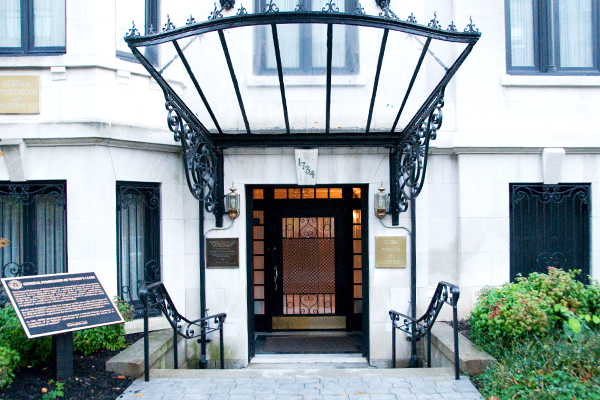
At GFWC Headquarters in Washington, D.C., Historiq's Chief Archivist, Jay Bosanko, processed records documenting the administrations of GFWC Past International Presidents. The project brought together professional archival judgment, hands-on physical processing, and Historiq's novel voice-based approach to archival arrangement and description.
All of the work was completed in the stacks using Historiq on an iPhone. Jay used voice-based cataloging to capture description while working directly with the records, including box- and folder-level inventory work, re-housing, labeling, and the creation of finding aids.
Preserving a Legacy of Women's Leadership
Preserving and sharing records that document GFWC's work is not new to the organization. Founded in 1890, GFWC established its Women's History and Resource Center (WHRC) in 1984 to collect, preserve, interpret, and promote the history of GFWC.
The WHRC documents the social and political contributions of GFWC clubwomen from 1890 to the present through the GFWC archives and related special collections. Its holdings are available to clubwomen, academics, and the public.
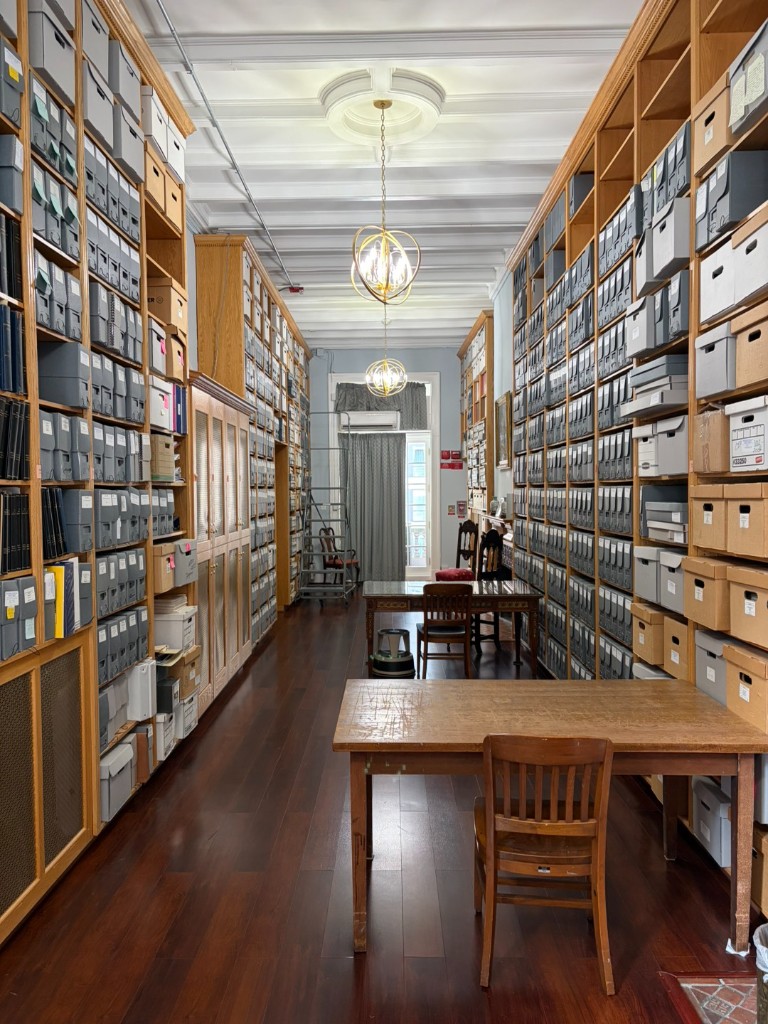
But like many archives, GFWC faced a processing backlog. Important materials were preserved, but not yet described, organized, and discoverable at the level needed for ready access.
Joanna Church, WHRC Librarian, stewards the WHRC collection, handles research requests, and shares GFWC's unique resources with researchers and fellow lovers of women's history. As a one-archivist team, she is responsible for all of that work and more. What Joanna needed was a trusted force multiplier: a partner who could help reduce the backlog while allowing her to focus on serving researchers, supporting GFWC members, and expanding access to the organization's history.
“Historiq's work has moved us leaps and bounds forward in our ability to share our recent accomplishments, while at the same time freeing up my time so that I can focus more on research and outreach and less on processing. GFWC is excited to benefit from Historiq's innovative approach, and to learn how new technologies can be of use, even in small organizations like ours.”
A New Model for Archival Processing
During the project, Historiq processed more than 50 cubic feet of archival records documenting GFWC's past leadership. Jay completed box- and folder-level inventories, re-housed materials, created and placed new labels, and produced finding aids to make the collections easier to discover and use.
The work was powered by Historiq's voice-based approach to archival arrangement and description. Designed around the realities of archival labor, Historiq allows archivists to capture description while working directly with the records, box by box and folder by folder, without separating intellectual control from physical processing.
Rather than putting technology ahead of archival judgment, Historiq keeps the archivist and the records at the center of the workflow. Voice-based cataloging allows archivists to describe materials in context as they arrange, re-house, label, and make decisions about the collection. The result was faster processing grounded in archival expertise: physical control, intellectual control, and usable description created together.
Archival Processing, by the Numbers
For GFWC, Historiq processed more than 50 cubic feet of archival material at a rate of approximately one hour per cubic foot, including physical re-foldering, reboxing, labeling, and descriptive work.
For presentation purposes, that project rate is compared below with a 12.2-hour-per-cubic-foot composite benchmark derived from published archival processing guidance from RIT, MIT, and Yale. Because the source guides use different units, levels of processing, and planning assumptions, the composite is intended as a practical comparison point rather than a formal industry standard.
Process archival collections 12.2× faster per cubic foot.
Historiq Una ran at 1 hour per cubic foot at GFWC against a cited 12.2-hour composite benchmark¹.
Hours per cubic foot
1 Composite benchmark derived from archival processing-rate guidance published by RIT Archives Processing Manual, MIT Distinctive Collections Processing Rates, and Yale Beinecke Manuscript Processing Manual.
Figure 1. Historiq processed records at approximately 1 hour per cubic foot at GFWC, compared with a 12.2-hour-per-cubic-foot composite benchmark derived from published archival processing guidance from RIT, MIT, and Yale.
cubic feet processed
per cubic foot, including re-foldering, reboxing, labeling, and description
folder titles captured through voice-based description
In one stretch of the project, Jay captured folder titles across 10 cubic feet of material in less than an hour using Historiq's voice-based workflow. More description, captured in real time and in context, means more usable collections for staff, members, and researchers.
During processing, GFWC surfaced materials that help bring its institutional history to life, including a video featuring Barbara Bush. Discoveries like that show the practical value of processing: description turns stored records into accessible history.
From Backlog to Discovery
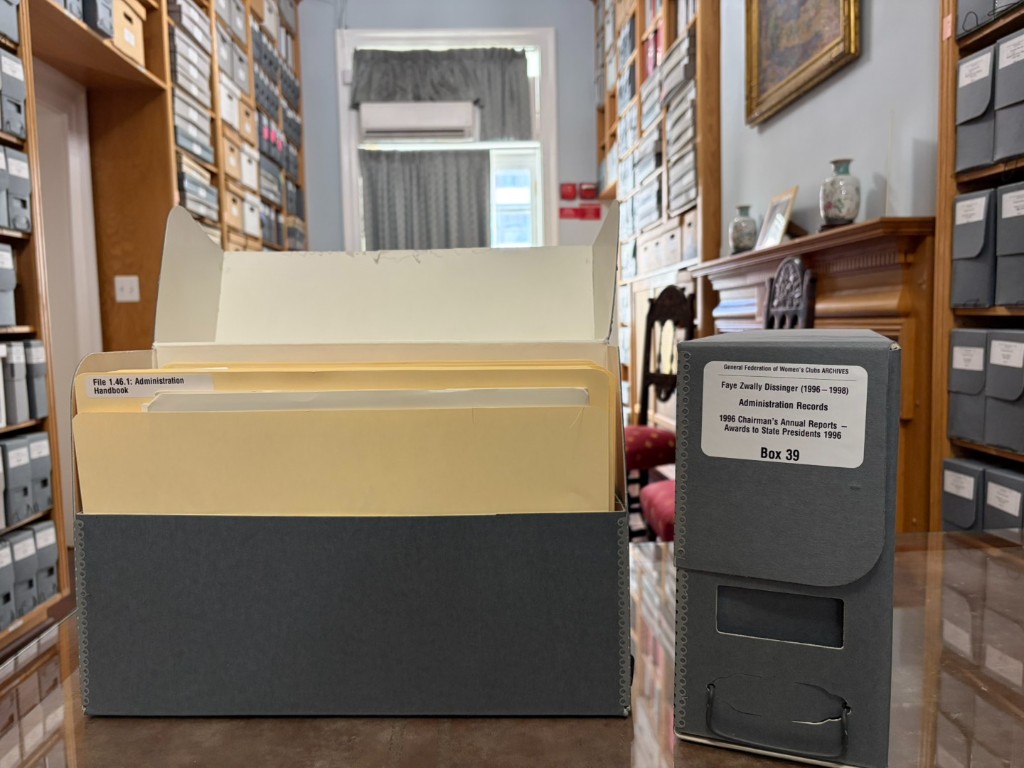
GFWC now has far greater insight into the records documenting the contributions of its past leadership and the rich legacy of the organization. Headquarters staff can more readily access these materials to learn from the past, celebrate milestones, respond to research requests, and share the work of GFWC with members and the public.
At the completion of the project, GFWC had more than 50 cubic feet of freshly processed material ready for access and discoverable through finding aids. The work will enhance the resources available to GFWC and help inform future collection priorities for Joanna, interns, volunteers, and staff.
For a historic organization with a national and international membership, that access matters. GFWC has more than 60,000 members in affiliated clubs across all 50 states, the District of Columbia, and more than a dozen countries. Its members work in their communities to support the arts, preserve natural resources, advance education, promote healthy lifestyles, and encourage civic involvement. Historiq helped GFWC make more of that story discoverable.
About the General Federation of Women's Clubs
GFWC club members are the heart of not only the Federation, but also the communities in which they live and work. GFWC members transform lives each day, not simply through monetary donations, but through hands-on projects that provide immediate impact. With a grassroots approach that often thinks locally while creating broader impact, GFWC, its clubs, and its members remain committed to serving as a force for good, as they have done since the organization's formation.
With more than 60,000 members in affiliated clubs in all 50 states, the District of Columbia, and more than a dozen countries, GFWC members work in their communities to support the arts, preserve natural resources, advance education, promote healthy lifestyles, and encourage civic involvement.